Why Airplane Windows Are Round And Other Design Choices That Quietly Save Lives
Why is every airplane window curved, never square? The real answer involves a 1950s jet, metal fatigue and a lesson the industry never forgot.

Published Sep 25, 2026

Watch Road Tests on 6Pistons YouTube
Exhaust sound clips, dynamic track tests, and drag races produced by our team.
Look out of your window seat on your next flight and you’ll notice something: the window isn’t a rectangle. It’s not really a circle either. It’s a rounded-off shape somewhere in between. Soft corners, no sharp edges anywhere. That shape wasn’t chosen by a designer chasing a look. It was chosen because a sharp corner, on a pressurized aircraft, can kill everyone on board.
The Comet That Changed Everything
In the early 1950s, the de Havilland Comet was the most advanced airliner in the world, the first commercial jet, flying higher and faster than anything before it. It also had square windows, punctuated by sharp 90-degree corners, in keeping with how designers built everything else at the time.

Between 1953 and 1954, three Comets broke apart in flight with no warning. Investigators eventually traced the cause back to something almost nobody had thought seriously about before: metal fatigue caused by repeated pressurization cycles.
Every flight, the fuselage inflates like a balloon as cabin pressure rises, then deflates as the aircraft descends. Do that thousands of times, and the metal starts to fatigue, but not evenly . It fatigues fastest wherever stress concentrates, and stress concentrates hardest at sharp corners.
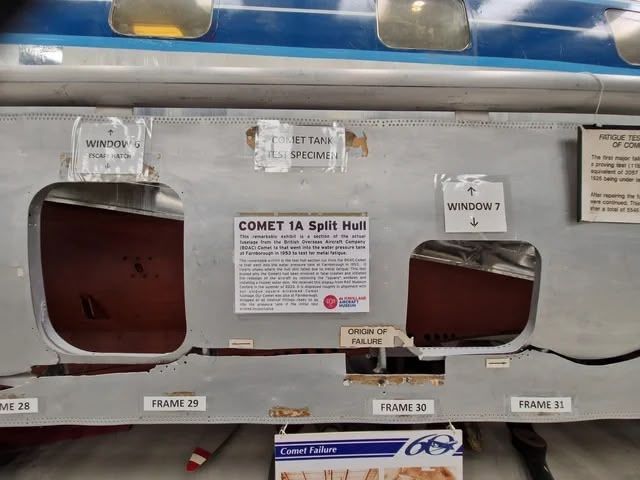
The square window corners on the Comet were acting like tiny stress magnets. Cracks started there, grew invisibly with every flight, and eventually the fuselage failed catastrophically at altitude.
Why Curves Fix the Problem
A rounded window spreads stress evenly around its edge instead of focusing it into a single point. There’s no corner for a crack to start from. Corners concentrate stress, curves distribute it. This philosophy reshaped how engineers think about every opening cut into a pressurized fuselage: doors, cargo hatches, even the small oval windows on cargo doors all follow the same logic today .
It’s one of the clearest examples in aviation history of a lesson learned the hardest possible way, then permanently built into every aircraft that followed. You’ll never see a square window on a commercial jet again, not because it looks bad, but because the industry doesn’t repeat mistakes that cost lives.
The Tiny Hole You’ve Probably Noticed
Look closely at your window and you’ll spot a barely-visible pinhole near the bottom of the middle pane. Most passengers assume it’s a defect. It isn’t, rather it’s deliberate.
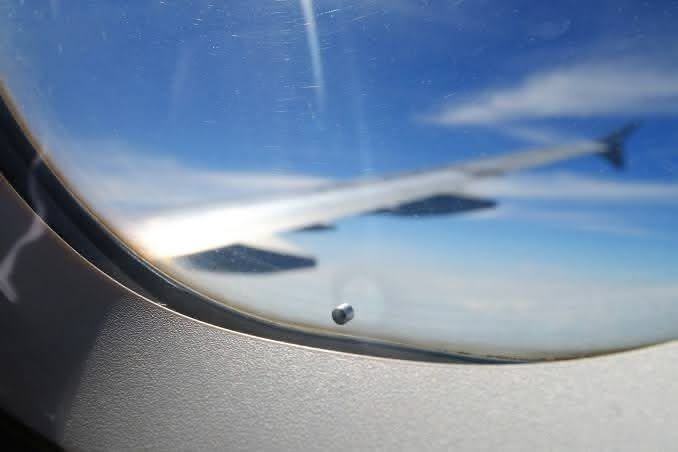
Airplane windows are actually made of three layers, not one: an outer pane that bears the full pressure load, a middle pane with that small hole, and an inner scratch-guard pane you can actually touch.
The hole in the middle pane exists to equalize pressure between the two structural panes, so that if the outer pane were ever compromised, the middle one is already pressure-balanced and ready to take over the load instantly . It also prevents moisture from fogging up the window by keeping the space between panes dry.
Winglets: Not Just a Style Choice
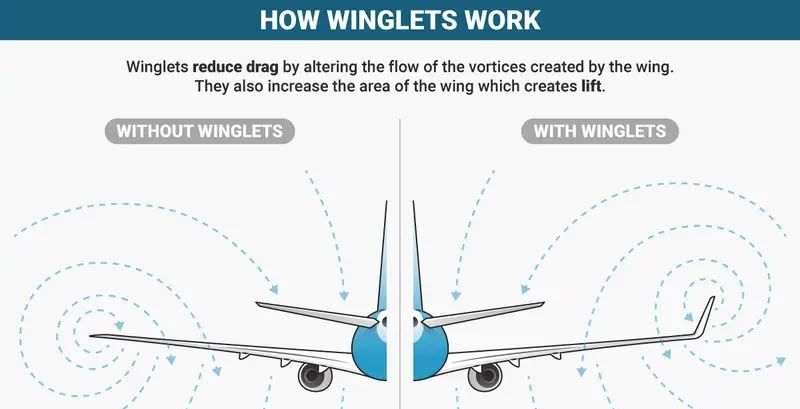
Source: Boeing
The upward curve at the wingtip of most modern aircraft looks stylish, but it’s solving a specific aerodynamic problem. Air escaping from the high-pressure underside of a wing to the low-pressure topside at the tip creates a swirling vortex that drags on the aircraft and wastes fuel.
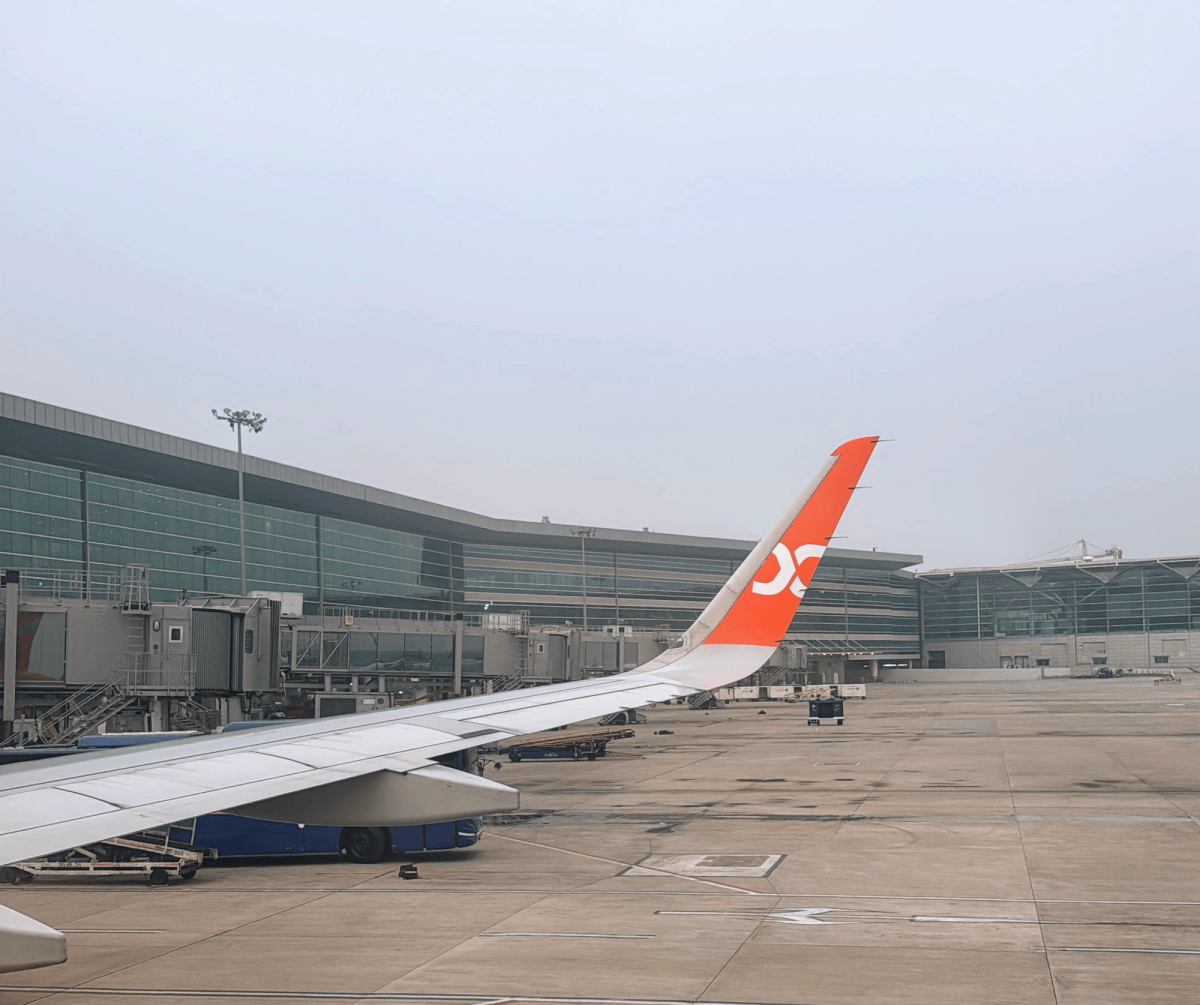
Winglets disrupt that vortex, recovering a meaningful percentage of fuel efficiency on longer flights which is exactly why airlines retrofit older aircraft with them even though it costs money upfront.
The Common Thread
None of these design choices exist because they look futuristic. Every one of them exists because someone, somewhere, learned an expensive lesson about physics and then made sure it could never happen again. That’s what separates aviation from almost every other engineering field: the industry treats every failure, however small, as data point that must permanently change the next design.
Next time you’re in a window seat, you’re not just looking at a piece of curved plastic. You’re looking at decades of pressurization research and an industry-wide commitment to never make the same mistake twice.
For more breakdowns like this, the engineering, the history and the "why" nobody explains, follow @6pistonsmedia on Instagram, X, and LinkedIn.
We turn aviation's fine print into things worth knowing.
All personal photographs included in this article are the intellectual property of the author. Unauthorized reproduction, distribution, or use in any form, digital or print, is strictly prohibited without prior written consent.